Eggplant, which are known to the British as aubergines, typically have deep purple skins.
However there are also some very beautiful white, pink, and striped varieties of eggplants to add extra color to your garden!

Eggplant is a warm-weather crop and should not be set out in the vegetable garden until the evening temperatures can be expected to stay above 55 degrees.
Start the seeds indoors in the spring to gain a good six weeks on the growing season.
Sow 2 seeds to a pot, ½ inch deep.
The seedlings will be up in about a week and a half.
When
it is apparent which seedling is the stronger, clip off the weaker of
the two so that there will be only one eggplant growing in each pot.
Eggplants like to be bedded in rich, warm, and moist soil.
Depending on your climate, most gardeners wait until early June to set out seedlings sown in April.
A good rule of thumb is to set out eggplant seedlings when there is no danger the night temperatures will drop below 55 degrees.
Even though your vegetable gardening site's soil has already been fertilized for other crops, it never hurts to add a bit more.
Dig 5-10-5 fertilizer into the plot at a rate of 4 pounds to 100 square feet before setting the plants in at 2 foot spacing.
Water the plants after transplanting.
Plant one eggplant per medium-sized container, or several plants in a large container.
Fertilize every week or two with liquid garden fertilizer according to the directions on the container.
Be sure to place the containers in a sunny location.
However there are also some very beautiful white, pink, and striped varieties of eggplants to add extra color to your garden!
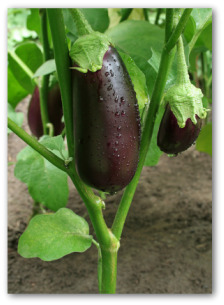
Growing Eggplants at Home
Eggplants in Container Gardens
Eggplants are good candidates for container grown vegetables because of their shallow root systems.Plant one eggplant per medium-sized container, or several plants in a large container.
Fertilize every week or two with liquid garden fertilizer according to the directions on the container.
Be sure to place the containers in a sunny location.


